
BDSM
BDSM is an umbrella term for consensual sexual and intimate practices that explore power, control, sensation, structure, and trust. The term BDSM is an acronym which stands for Bondage & Discipline (B&D), Dominance and Submission (D/s) and Sadism & Masochism (S/M). It falls within the wider definition of kink. For some people, BDSM is a core part of their sex life, sometimes becoming a lifestyle, within limits. For others, it is temporary, occasional, playful, or purely emotional. There is no single specific way to engage with it.
Historically, BDSM is said to have roots in colonialism, warfare and states exercising power over their own or other people. This is a complex topic but it is important to acknowledge the roots of practices in order to understand the shift from power, discipline and punishment imposed by force, to consensual play. Queer subcultures started re-contextualizing these dynamics in the 20th century.
BDSM also has deep roots in queer and trans communities, including leather culture, lesbian BDSM history, ballroom culture, and chosen-family networks. For many queer adults, kink offers space for erotic expression, gender euphoria, and power dynamics that don’t fit mainstream expectations.
BDSM is not about abuse, violence, or doing things without consent. In healthy BDSM, consent is explicit, ongoing, and the wellbeing of everyone involved is central to all interaction.
-
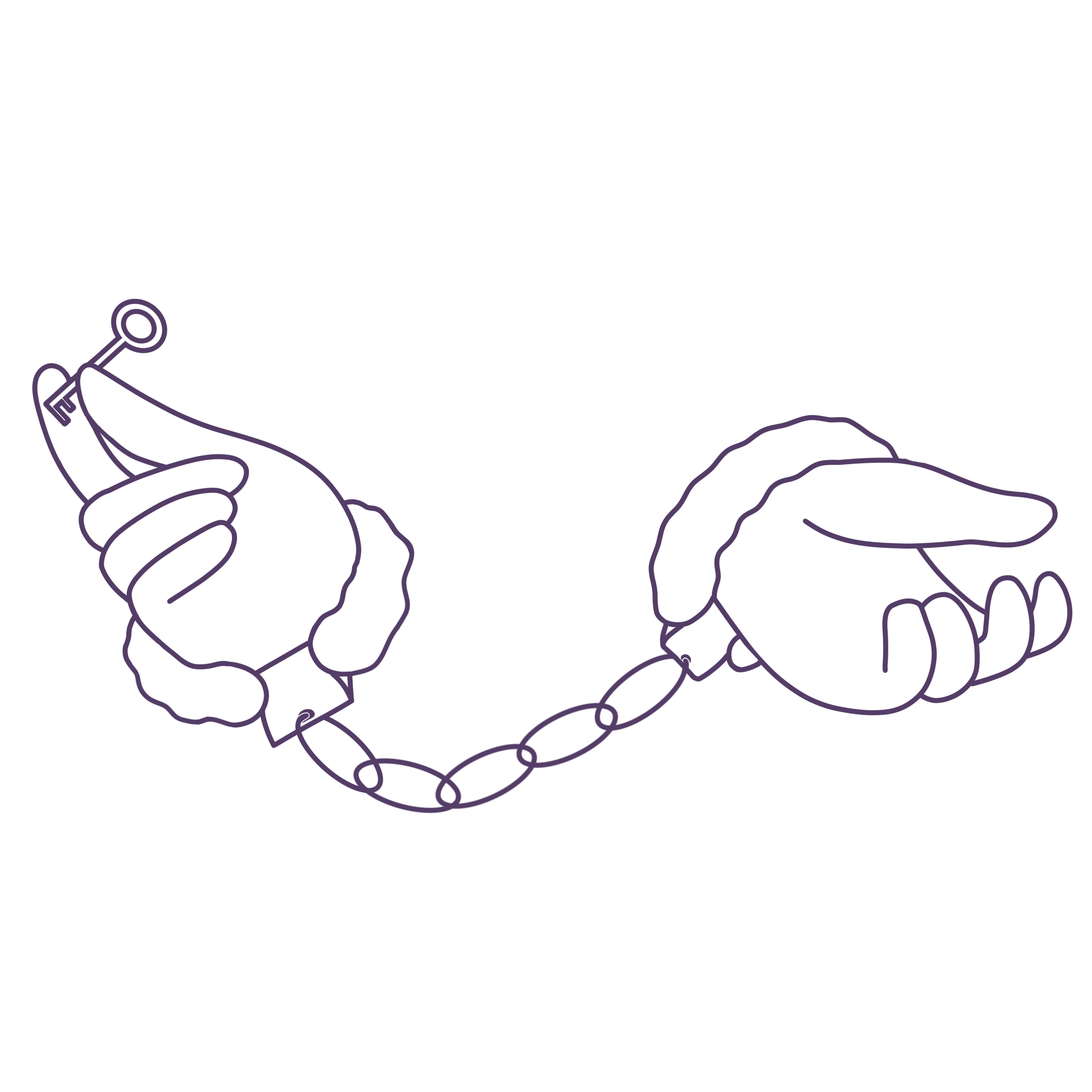
We will start by clearing some misconceptions about BDSM. First of all, BDSM is not about abuse, violence, or doing things without consent. Healthy BDSM, consists of a consensual environment where all parties involved have communicated and previously agreed on what is going to take place during their play session, and in some cases, in day to day life (see Negotiation below).
Active responsible kinksters do not take this lifestyle lightly, and carry out constant research and learning before and even during play. They communicate constantly to make sure that their partner is kept safe at all times.
Some misconceptions that should be addressed are:
BDSM is abusive ❌ BDSM is not abusive and must always follow a period of negotiation, consent and communication on limits particularly by the submissive party. BDSM should not take place if these principles are missing.
BDSM ignores consent ❌ Nothing in BDSM happens without consent. All play and expectations are derived from consent. This is built on trust between parties involved.
BDSM is a sign of trauma ❌ BDSM is neither traumatic, nor is it a sign of trauma. In fact, negotiation and discussion prior to play must include a discussion on traumas, in order to avoid resurfacing them to keep all participants safe. People from all paths of life enter BDSM for different reasons, and not necessarily from trauma.
BDSM is violent ❌ BDSM is not violent. Although some activities may seem rough and risky, every part of it must be negotiated beforehand and all parties must remain safe.
BDSM should be enjoyed by everyone ❌ BDSM is not for everyone, and people who are not interested must not be pressured to participate.
BDSM is a competition ❌ No session or play is a competition. It is a consensual environment between active kinksters who have mutually agreed to take part.
BDSM is always sexual ❌ Some people participate in BDSM as a form of escapism, and as a moment where they can let go and be someone else. It can take different forms of sensations, power exchange, self-expression or to build a higher level of trust and emotional connection.
At its core the BDSM community is built on communication, consent, trust and mutual respect. Negotiations and clear boundaries are considered and the starting point of any type of relation. Enjoying BDSM does not make someone extreme. Not enjoying it does not make someone boring.
-
The letters “BDSM” are often used to describe different elements that may or may not be present:
Bondage and Discipline
Bondage can take many forms, depending on what gear is used, rope, restraints, cuffs, tape and many others. It is derived from the Idea of having the submissive being restrained physically.Discipline is built on Dominance/Submission dynamics (see below) and Total Power Exchange (TPE) dynamics. These are built on rules and protocols which both parties must follow. Built into the rules are protocols that must be followed and consequences for not following the agreed behaviour.
Dominance and Submission
The Dominant/Dom is the person who oversees the dynamic, creating rules and giving orders to give structure and a shifted controlled balance that favours the Dom. Dominance is not abuse of power but an agreed transfer of power through which the submissive/sub is kept in check.The submissive/sub is the counterparty of the Dom, and abides by the rules and the orders of the Dom. For some, being a submissive is described as a desire, whilst for others it is a need.
Whatever the motivations are, all rules must be agreed upon initiations, respecting limits and making sure that the sub is kept safe through a dynamic of play, predicament situations or “punishments”.
Sadism and Masochism (S&M)
Sadism is a natural desire to create discomfort for another person, giving a sense of pleasure. Techniques used may result in physical pain or psychological humiliation. Whilst this applies to BDSM generally, particularly in the case of S&M, play must be done within a fully consenting environment, with set and agreed limits. The goal is not to hurt, but to create a sense of erotic body euphoria, which heightens sensibility and pleasure.The masochist on the other hand is the counterparty who gives consent and sets limit. Through S&M, the masochist derives pleasure from the sensation inflicted by the sadist. Techniques used could include temperature play, impact, pressure, sensory deprivation (blindfolds/earplugs) or sensory overloads (loud music and bright lighting).
Not everyone who enjoys BDSM relates to all of these. Many people engage with just one or some of these aspects.
-
Roles & Dynamics in BDSM
Roles in BDSM do not map to gender, orientation, or presentation. Some queer communities have long used kink as a space to explore identity, fluidity, and power. It can be a very healing experience, playing with existing societal power dynamics in a safe and consensual way.
Some common distinctions between terms used in BDSM and terms used in other unrelated circumstances include:
Top / Bottom: Used to describe who is doing the action, not who is in control.
Dominant / Submissive: Used to describe authority and power, not technique.
Switch / Vers: Enjoying different roles depending on context or partner.
Other terms are used in BDSM: These roles express personality, energy, gender, or erotic vibe, and not maturity or literal parenthood.
Daddy, Sir, Master
Mummy, M’am, Femme Domme, Dominatrix
Handler/Pup
Boi/Brat
None of these are required. However they are used as simply tools people use to express themselves.
-
Many BDSM practices involve an element of power exchange. The use of the term ‘exchange’ is important, because it means that power is not taken; it is consensually given.
The submissive person controls a fundamental aspect of this power by choosing to offer it. The dominant person, on acceptance, is responsible for handling it with care.
Power exchange can be:
temporary or ongoing
sexual or non-sexual
structured or fluid
Some people enjoy clear roles. Others like switching. Some enjoy power dynamics strictly as fantasy, without enjoying them in real life or wanting to explore BDSM. All of this is valid.
-
Consent in BDSM must be deliberate and explicit. Although consent is always important, in the case of BDSM it is even more important. This is because BDSM can involve situations of vulnerability, intensity, or risk. This is why clear communication matters even more.
It is important to know and explore your own boundaries before engaging with others in order to be able to enthusiastically give consent to an activity. Within BSDM play, a “maybe”, should be taken as a “no”.
Small exercises on giving a receiving consent can help with this.
Consent often includes:
talking in advance about interests, limits, and boundaries
agreeing on what is on the table and what is not
establishing safewords and/or signals
checking in during and after a scene
Consent can be withdrawn at any time. Stopping or slowing down is not failure. It is communication, and it is important for everyone involved. It can also happen that consent is withdrawn to allow for a period of communication, before it is given again in the same session.
Being kinky does not involve reducing boundaries. Often it means being an expert at knowing and understanding them.
-
Many people prefer to negotiate before BDSM play. This does not always need to be a formal and structured conversation, particularly for persons experienced in exchanging BDSM play, such as long-term couples. In all cases however, the expectations need to be clear even for experienced partners.
Negotiation can include:
what kind of play is wanted
physical and emotional limits
triggers or past trauma
health considerations
personal sensitivities
what aftercare looks like
Boundaries protect everyone involved. Respecting boundaries is not optional. Someone who ignores them is not being dominant. They are being unsafe.
-
In regular sex, “no” and “stop” mean stop. In BDSM, these words could be part of the fantasy. Safewords exist to create clarity by replacing the words “no” and “stop” with alternatives that convey the same clear intent.
A good safeword is:
easy to remember
distinct from anything used in play
respected immediately
Many people use:
Green: everything feels good
Yellow: slow down or check in
Red: stop immediately
Others prefer to choose words which are completely made-up or absurd. These could include the name of a fruit (e.g. banana), an animal (e.g. panda) or a completely invented word. What is important is that safewords are memorable and easily recalled even in situations of high sensory overload.
Using safewords is not a failure. Safewords are communication tools that make the intensity of BDSM safe and possible.
Some bilingual people may agree to use one language for negotiation and ordinary communication and another during play. In the context of Malta, Maltese could be used to negotiate, and English during play. This can help distinguish the scene from everyday reality, but the meaning of any language switch, check-in or safeword must be clearly agreed beforehand.
-
When someone cannot speak because of gags, breath play, or sensory overload such as very loud music, non-verbal safewords are still essential. However it is also advised to agree on non-verbal safewords even if play is not expected to require them.
Non-verbal safewords can include:
tapping repeatedly (similar to the tapping-out gesture used in wrestling)
snapping fingers
Another easily visible hand signal
Holding and then dropping a pre-agreed object such as a piece of clothing
These should be agreed on and understood beforehand. The person in control is responsible for staying aware at all times.
Important note on Verbal and Non-Verbal Safewords
Often in BDSM, sensations and emotions escalate very rapidly, making memorising and understanding safewords difficult unless they had been agreed beforehand. Safewords should be discussed well outside of BDSM-play. The discussion is not the first stage of play, but something that takes place completely outside of the event.
-
Consent is not only verbal. Bodies communicate constantly and they may communicate outside of the agreed safewords.
The person who accepts power must remain perceptive and immediately pause or stop in cases of:
sudden stillness
shaking or dissociation
difficulty breathing or focusing
changes in skin color
tensing or pulling away
Ignoring these signs is unsafe.
-
BDSM is not risk-free, but risk can be reduced through knowledge and communication.
Harm reduction includes:
learning about practices before trying them
using appropriate equipment.
use higher-quality equipment that is safe and less likely to lead to injury
avoiding play while intoxicated
checking circulation and breathing
knowing when to stop
Two common frameworks in kink:
SSC (Safe, Sane, Consensual)
RACK (Risk-Aware Consensual Kink)
You get to choose what aligns with your values and needs.
Listening to your body is part of responsible play and get to know your own boundaries.
-
BDSM is adaptable for a wide range of bodies, neurodivergencies, mobility levels, and energy capacities.
This can include:
using pillows, supports, or furniture
choosing low-impact or sensory-focused play
shortening scenes
negotiating pain differently
planning breaks
Disabled and chronically ill people belong in kink communities.
-
Aftercare is the physical and emotional care that happens after BDSM play. It is an essential part of the practice.
Aftercare can include:
physical closeness through cuddling and touch
Verbal reassurance and active listening
Grounding through sensory focus and de-roleing rituals (using legal names as opposed to titles used during play, such as ‘Sir’ and ‘Ma’am’)
Food (such as chocolate), water, temperature regulation (a blanket to heat up, or fan/air conditioning to cool down)
Discussion about the experience
Checking in later (where possible)
Different people need different kinds of aftercare and aftercare does not necessarily happen at the same time. For instance, physical closeness and grounding can happen immediately after the session but the conversation on the experience takes place later. Talking about it beforehand matters.
Checking in after play is important particularly in long-term relationships or for regular partners. If the encounter is casual, and there is an expectation of checking-in, this must be communicated well before the act. Nonetheless even if this discussion does not take place, every effort should be made to check in with your partner even if the encounter was more casual.
This section is vital, as Aftercare is a concept that doesn't have a single-word equivalent in Maltese, so we describe it as the care provided after the activity.
-
Sometimes, during or after an intense scene, a submissive may slip into what’s often called subspace - a dreamy, floaty mental state that can feel like release, surrender, or a deep, peaceful calm.
In this space, you might feel incredibly present, emotionally open, and deeply connected to your partner or the experience. It’s a bit like the meditative glow after yoga, or that runner’s high after a great workout — all thanks to a cocktail of hormones (endorphins, adrenaline, dopamine, and oxytocin) that flood the body during moments of intense sensation.
It’s important to remember that subspace doesn’t happen to everyone, and it’s never something to chase or force. Every scene is unique, and the goal should always be mutual pleasure, safety, and connection — not achieving a particular state. If subspace happens, enjoy the ride. If not, that’s completely okay too.
Try to agree on boundaries before a scene, as subspace may make a person more susceptible to agree to things without having fully considered all implications. The dominant or person in charge should be aware of this.
-
After intense play, some people experience emotional or physical lows. This happens especially if there is no proper Aftercare.
This can include:
shame and regret
sadness
irritability
vulnerability
fatigue
This happens because of hormonal and emotional shifts. Aftercare and follow-up help. Dominants can experience drop too.
This drop can come days later after play has finished and can be a natural part of an intense interaction.
-
When a BDSM “scene” is defined, it involves a period of play with a beginning, middle, and end. Before any of this happens, negotiation must have been concluded, and all limits are set and agreed. Through negotiation, roles will be set, alongside active consent and aftercare.
During a scene:
Both parties help each other enter into a headspace, and clear their minds
The parties initiate the intended or planned scene
A point of pleasure is reached for both parties
The parties slowly come out and initiate aftercare
Scenes can be short, long, planned, or spontaneous. Clarity and care matter more than perfection.
In other cases, particularly in long-term relationships, BDSM roles might spill into daily life. In these cases, the roles must be very clearly defined, and there must be a clear agreement on when play stops. Not doing so, risks blurring the lines that make partners in a relationship equal.
-
Many queer adults explore BDSM online or remotely.
Digital kink can include:
sexting with negotiated boundaries
voice or video power exchange
remote-controlled toys
task-based dynamics
roleplay by text
Negotiation is still essential.
-
Healthy BDSM is not about pushing someone past their limits. Limits exist for a reason.
Respecting limits does not make someone less dominant or less submissive. It makes them trustworthy.
-
Alcohol or drugs can blur communication. Some people mix substances with kink, but risk increases.
If substances are involved:
keep play lighter
avoid high-risk activities
have sober check-ins
stop sooner
If consent is unclear, and one or more of the people involved are too drunk or high, play should not continue.
For more information on sex & subtances cick here.
-
Many people learn BDSM through community, workshops, or peer education.
Good sources of learning include:
kink-aware educators
community events
reading and reflection
trusted partners
Porn can spark ideas but is not a guide. You might enjoy watching something without wanting to do it. Watching ethically sourced, queer friendly porn can help with more realistic and relatable images.
-
These questions can make BDSM conversations easier, more grounded, and less intimidating.
Try:
“What kind of sensations or dynamics interest you, even if you’re unsure about them?”
“Are there roles you feel curious about but haven’t explored yet?”
“What helps you feel safe if we’re trying something new?”
“Is there something you’d enjoy giving or receiving that we haven’t talked about?”
“Are there fantasies you like in imagination even if you don’t want to act on them?”
“What does good aftercare look like for you?”
“Are there types of play you want to learn about before trying?”
These are just openings, not commitments.
-
If you explore public or semi-public kink spaces like kink events, play parties, or dungeons, a few norms help things feel welcoming:
Ask before touching anyone or their gear.
Pronouns matter; always respect people’s identities.
Queer play spaces often prioritize safety for trans, disabled, and marginalized kinksters- follow posted rules.
Watching is normal; staring is not.
Nobody owes you play.
Negotiation can be verbal, written, or quick, but it should be clear.
Good communities feel supportive and should not make anyone feel pressured. .