
Kink
Kink is any kind of sexual or intimate interest that sits outside what people usually call “vanilla” sex. That can mean certain fantasies, roles, sensations, outfits, scenarios, or ways of doing sex that feel exciting, unusual, or extra personal.
Kink is not one thing. It can be soft, silly, sensual, intense, romantic, dirty, playful, structured, or chaotic. It can be a tiny add-on to your sex life or the main flavour.
Kink is also optional. If you are curious, great. If you are not, you are not missing anything.
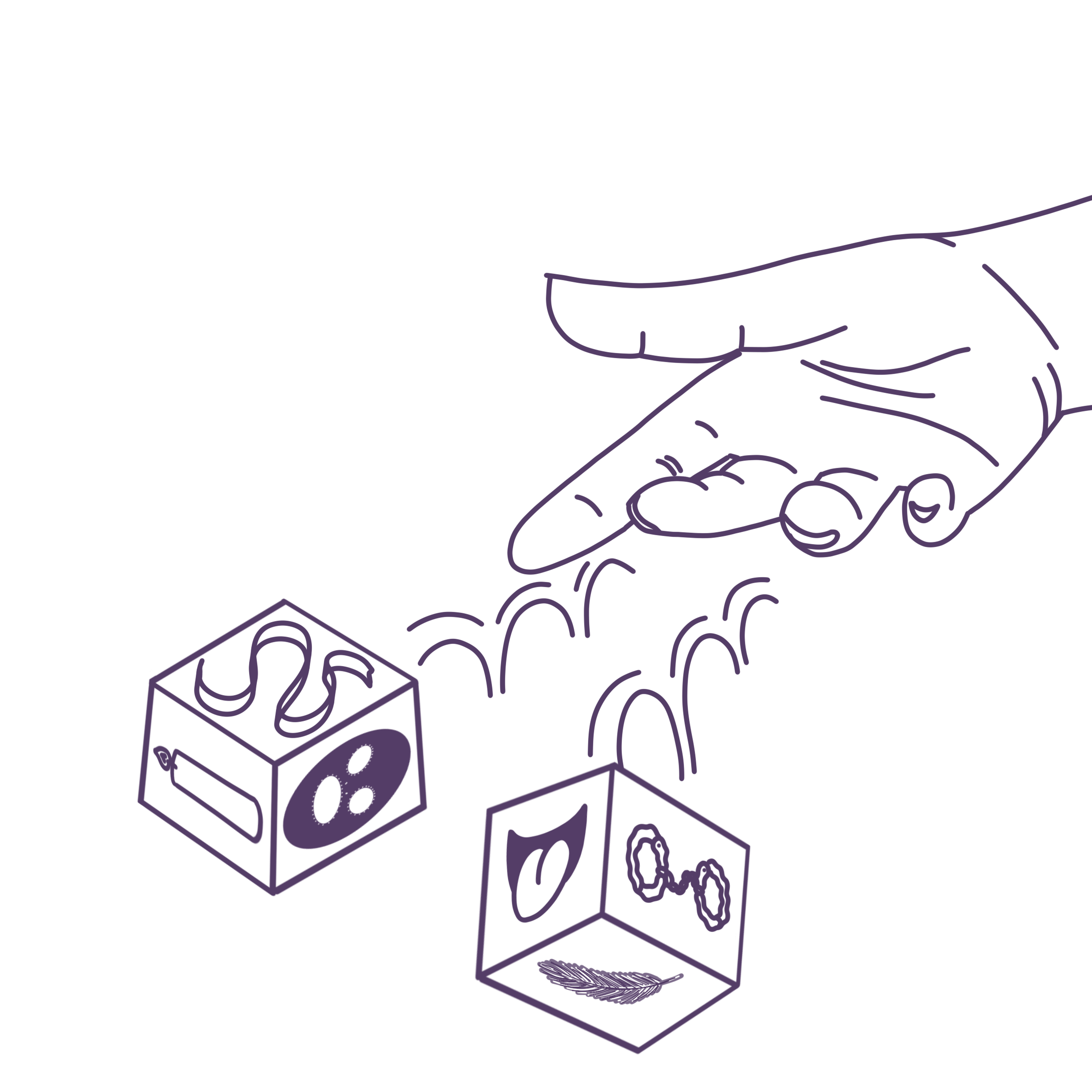
-
Kink is the wider umbrella. BDSM is one part of it.
Kink can be anything that adds spice, novelty, or a specific turn-on.
BDSM usually involves clearer structure, roles, power dynamics, or higher-intensity sensation, and it often benefits from safewords and aftercare.
Plenty of people enjoy kink without identifying as BDSM. Plenty of BDSM people are kinky in other ways too.
-
People enjoy kink for lots of reasons, including:
Novelty: new sensations, new roles, new stories
Freedom: stepping outside what you think you are “supposed” to like
Connection: feeling seen, desired, and understood
Control: either taking control, giving it away, or playing with it
Sensation: intensity, teasing, overstimulation, or slow build
Fantasy: acting out scenarios safely with consent
Identity: expressing masculinity, femininity, queerness, softness, dominance, submission, or something else entirely
Kink is not automatically linked to trauma. Some people use kink to heal, some to play, some to explore. No single explanation fits everyone.
-
Kink is meant to feel exciting, not stressful. The safest exploration starts small.
A good way to begin:
Talk about what you are curious about and what you are not
Choose one new thing, not five
Keep intensity low at first
Agree on a stop word or signal
Check in during and after
You do not need to jump into anything extreme to be “properly kinky.” Trying small things is still kink.
-
Consent is always required. Even light kink can go wrong if someone feels pressured or unsure.
A few good questions:
“Are you into this idea, or only doing it for me?”
“What is a hard no for you?”
“What sounds fun, and what sounds stressful?”
“How would you like me to stop if you want out?”
If someone hesitates, treat that as meaningful information. Kink should feel chosen, not negotiated through guilt or pressure.
-
CNC is a planned power-play where everyone agrees to erotic “non-consent” while still being 100% consenting.
It can include resistance, force fantasies, roleplay, or using “no/stop” as part of the script- but real boundaries always stay in place.For CNC to be safe:
• negotiate the scene (language, limits, intensity, body parts)
• choose a safe word + a nonverbal signal (like tapping or any word as an alternative to no/stop)
• stay attuned during the scene- If you notice freezing, dissociation, or overwhelm = stop, check in
• avoid CNC when anyone is unsure, pressured, too drunk/high or impaired
• debrief + aftercare to reconnect outside the roleplayCNC is intentional kink built on trust, clarity, and care and not an excuse for ‘anything goes’.
-
Kink works best when boundaries are respected without argument.
Some people have:
Hard limits: never, not under any circumstances
Soft limits: maybe, but only with conditions
Curiosities: open to trying carefully
Boundaries can change over time. A yes once is not a yes forever.
-
Aftercare is not only for BDSM. Even playful kink can bring up emotions, vulnerability, or body sensitivity.
Aftercare can be:
Cuddling, water, reassurance
Laughing and debriefing
Quiet time
A message later that day
Aftercare is simply care. It keeps sex feeling safe and connected
-
This is not a checklist- You can be into one thing, many things, or none.
Sensation Play
Playing with different sensations on the skin and body.
Wax play with body-safe candles
Ice, warmth, or temperature changes
Light scratching, biting, or pinching
Vibration, teasing, and overstimulation
Sensory toys like feathers or soft fabrics
Sensation play can be gentle or intense. It depends on the people involved and the boundaries set.
Role Play
Acting out characters, scenarios, or dynamics.
Teacher and student role play between consenting adults
Boss and employee fantasies
Uniforms, costumes, scripted lines
Power roles without real-life power
Stranger Scenarios
Role play works best when people talk beforehand about what is fun and what is off-limits.
Power Play
Playing with control and surrender without necessarily doing full BDSM.
Being told what to do
Giving permission
Teasing and denial
Praise or humiliation, only if consented to
One person leading, the other following
Power play can be light and flirty or deeply emotional. Either way, consent is the foundation.
Exhibitionism & Voyeurism
Being seen or seeing others, in agreed contexts.
Watching a partner masturbate
Having sex where you might be heard, not seen
Adult venues like saunas or sex parties
Sharing consensual photos within agreed boundaries
This area needs clear consent and strong attention to privacy.
Group Sex & Shared Play
Sex involving more than two people, or shared sexual environments.
Threesomes and group settings
Play parties
Partner swapping
Watching, joining, or taking turns
Communication and boundaries matter a lot here because more people means more moving parts.
Body Focus & Specific Turn Ons
Some people are especially turned on by specific body parts or aesthetics.
Feet, hands, armpits, body hair
Latex, leather, underwear
Muscles, fat, size, smell, sweat
Voice, dominance, softness, femininity, androgyny or masculinity
This can overlap with fetish, but it does not need to be labelled.
-
Kink is not automatically healthy or unhealthy. Context matters.
It might be worth pausing if:
You feel pressured to do things you do not want
Your boundaries are not respected
The kink is the only way sex feels possible and it causes stress
The experience leaves you feeling unsafe or ashamed
Good kink feels consensual, respectful, and emotionally safe.
-
Many people carry shame about what turns them on. Shame is common, but it does not have to be permanent.
A useful approach is to ask:
Does this fantasy stay in fantasy, or do I want it in real life?
If I try it, would it be safe and consensual?
Do I feel respected and in control of my choices?
You are allowed to be turned on by odd, specific, or unexpected things. Being kinky is not something to be ashamed of. .