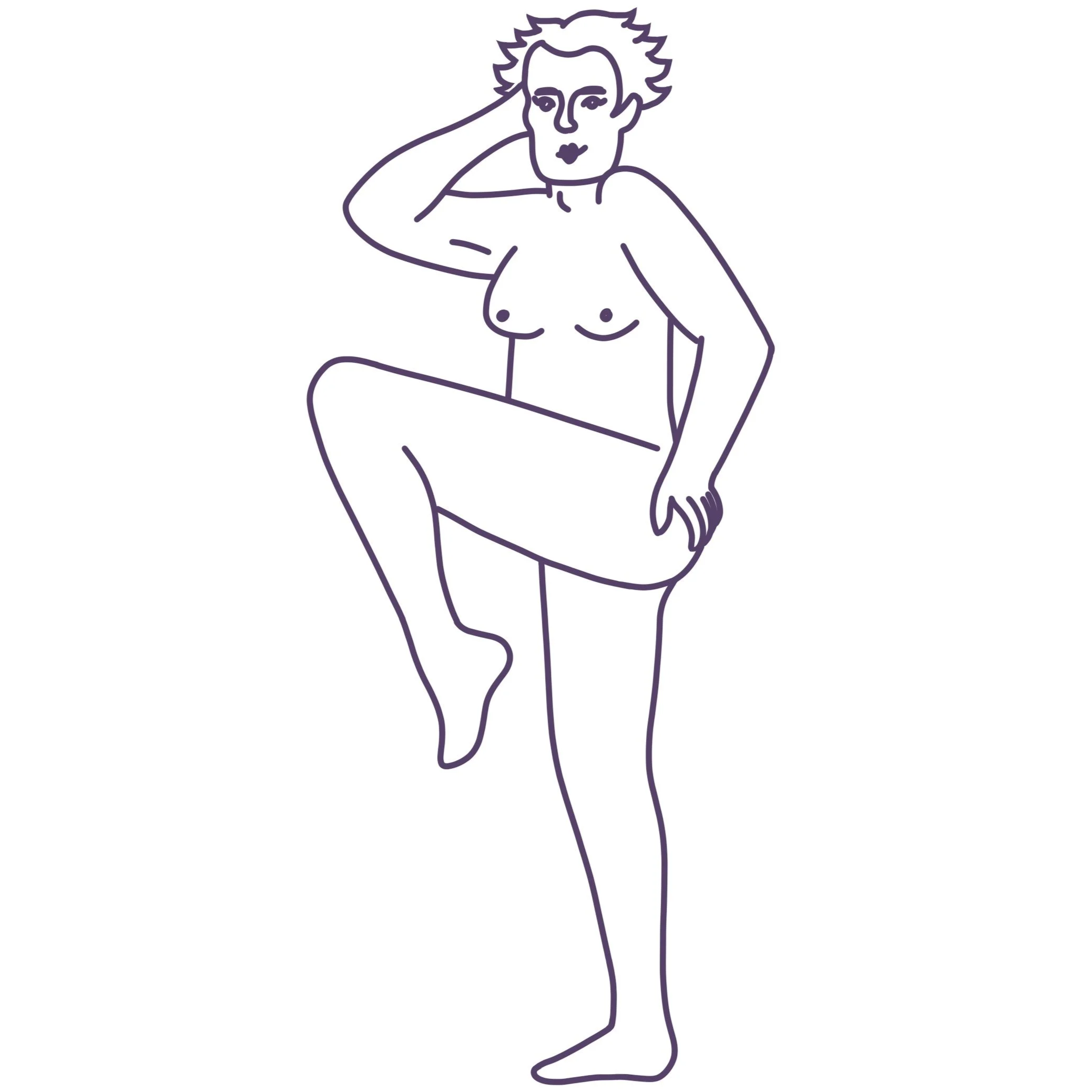
Trans Women
If you are not on estrogen, click here, and remember: you are still a woman!
-
Arousal is about more than anatomy. Feeling safe, desired, and affirmed can be as powerful as physical touch.
Dysphoria can make some kinds of touch difficult. You never have to do anything that doesn’t feel right.
Talk with partners about language, boundaries, and comfort levels before things get sexual.
Affirming touch is sexy touch. Feeling seen as yourself makes pleasure stronger.
You are valid and beautiful at every stage of transition, whether pre-op, post-op, or no-op.
Sex is not about anatomy; it is about connection, confidence, and comfort in your own skin.
Take your time, communicate, and remember that pleasure should always feel safe, mutual, and affirming.
-
Everyone uses different words* for their body. Some say "penis," some say "clit," some say "girl dick," and some prefer neutral words like "front" or "parts." Use the language that feels affirming for you.
Estrogen can make erections softer, shorter, or less frequent, but pleasure is still possible and real.
Orgasms can feel less focused in one spot and more like a wave through your whole body.
Shooting blanks is normal, as most trans women produce less semen on HRT.
Some trans women find gentle, slow, rhythmic touch more enjoyable than fast or firm stimulation.
Lube helps reduce friction and increases comfort, especially during changes on hormones.
Contraception is still recommended.
Trans women without bottom surgery, just like anyone else, don't necessarily engage or have to engage in anal or penetrative sex to derive sexual pleasure.
*Always tell partners what words feel right for you. Asking before touching or naming a body part is part of consent.
-
If you have had vaginoplasty, your body now includes a neovagina created from existing tissue.
There isn’t just one way to create a vagina. Surgeons use different techniques depending on anatomy, preference, and goals. All of them can lead to pleasure, sensation, and function- just in different ways.
Penile inversion: The most common method. The skin of the penis is used to line the vaginal canal. It can provide good depth, sensation, and natural lubrication with arousal.
Scrotal graft or skin graft: Adds extra tissue for more depth or width when needed.
Peritoneal or sigmoid colon vaginoplasty: Uses tissue from inside the abdomen or a small section of colon. These can self-lubricate more but may have a faint internal scent.
Zero-depth (vulvoplasty): Creates an external vulva without a vaginal canal. This option is ideal for people who don’t want or need penetrative sex.
Every neovagina is different. Sensation, appearance, and healing all vary. There’s no “better” version - only what fits your body, your health, and your goals.
Sensation varies. Some people feel pleasure quickly, others take time to build sensitivity.
A clitoris made from original tissue is usually still very sensitive.
The neovagina may need regular dilation early on to stay open. Over time, some people use dilation as self-care or part of pleasure.
Orgasms might feel different from before, but many people experience strong pleasure and new sensations.
Trans women with bottom surgery, still don't necessarily engage or have to engage in penetrative sex to derive sexual pleasure.
Go slowly, if needed, make sure to use the correct lubrication, and explore in ways that make you feel comfortable. Healing and pleasure both take time.
-
Estrogen or implants can create breasts that are just as sensitive and erotic as anyone else’s.
Nipple sensitivity can range from very strong to mild. Both are normal.
Some people find chest touch or breast play deeply affirming and emotionally powerful.
If nipple play feels new or intense, start gentle. Warmth, suction, and vibration can help you learn what feels good.
-
The anal area is full of nerve endings and can be an incredible source of pleasure for many people.
Anal play can stimulate the prostate (if still present) or simply the sensitive tissue around the rectum.
Take it slow, breathe, and use lots of lube.
Clean toys before and after, and use condoms or barriers if you share them.
Pee after sex or anal play to lower infection risks.
Some trans women describe anal play as giving them deeper, more whole-body orgasms. Others are not into it, and it’s perfectly normal!
-
Your whole body can be a pleasure map.
The neck, ears, nipples, stomach, and inner thighs can all become more sensitive on estrogen.
If you have a clitoris (after surgery), stimulation can feel sharp, warm, or electric.
For those without surgery, the underside of the shaft or the frenulum can remain highly sensitive.
Emotional closeness can heighten arousal, and confidence can boost pleasure.
Explore touch beyond genitals. Notice how different sensations change depending on your mood, comfort, or connection.